What to Plant in April

What to plant in April comes down to one number: how many weeks separate today from your average last spring frost. In zones 3 and 4, April is an indoor month, with peas, spinach, and onion sets the only things going outside. In zones 5 through 7, April is the big direct-sowing month for hardy crops like carrots, beets, lettuce, potatoes, and radishes, plus transplant time for broccoli and cabbage. In zones 8 through 10, the frost is already behind you, so April is when tomatoes, peppers, beans, corn, squash, and melons go in the ground before summer heat shuts the window.
Get your own dates: enter your zip code in our free monthly planting calendar and it will give you a sowing window for every crop below.
Updated September 2026
Most April planting advice fails for the same reason: it treats April as a season instead of a position on a timeline. April 10 in Atlanta and April 10 in Minneapolis are seven weeks apart in growing terms. So the lists here are sorted by zone, and each one is built from the same frost-date math the calculator runs.
The one number that decides your April list
Every planting date in this article is an offset from your average last spring frost. Seed packets bury this in phrases like "sow 4 weeks before last frost," and once you have the date, the whole month sorts itself out.
Here are the average last frost dates by zone, taken from the same dataset behind our frost date tool:
| Zone | Typical last spring frost | What April means there |
|---|---|---|
| 3 | Around May 23 | Indoor sowing month. Nothing tender outside |
| 4 | Around May 19 | Indoor sowing, plus peas and spinach mid-month |
| 5 | Around May 7 | Hardy direct sowing starts. Brassica transplants late |
| 6 | Around April 25 | Peak hardy-sowing month. Cucurbits started indoors |
| 7 | Around April 9 | Frost ends mid-month. Warm crops go in at the end |
| 8 | Around March 19 | Full warm-season planting. Beat the heat |
| 9 | Around February 9 | Last call for heat lovers before summer |
| 10 | Around January 12 | Wind-down month. Tropical and heat-proof crops only |
| 11 | No frost | Dry-season crops, then the summer rest |
Two things to notice. First, those are averages, and half of all years the frost comes later. Second, the zone ranges overlap more than people expect: zone 6 last frosts in the source data run from early April to early June depending on elevation and how far you sit from a coast. Look up your own zip rather than trusting the zone number alone.
The three planting jobs of April
Every crop in April falls into one of three buckets, and mixing them up is the single most common April mistake.
- Direct sow outdoors. Hardy seeds that germinate in cold soil and shrug off a late frost. Peas, spinach, radishes, carrots, beets, lettuce, kale, turnips, and arugula.
- Transplant outdoors. Cool-season seedlings hardened off and set out before your frost date. Broccoli, cabbage, cauliflower, kohlrabi, and onions.
- Start indoors. Warm-season seed that needs heat and cannot go out until after frost. Cucumbers, squash, melons, and in cold zones the last call for tomatoes and peppers.
If you put bucket 3 outside in April in a cold zone, you lose the plants. If you leave bucket 1 sitting in the packet until May, you lose the crop to summer heat. That's the whole game.
What to plant in April in zones 3 and 4
Your last frost is still four to seven weeks out, so April is mostly a windowsill month up here. That is not a consolation prize. What you sow indoors in April is what fills the garden in July.
Direct sow outdoors, mid to late April:
- Peas, as soon as the soil crumbles instead of smearing
- Spinach, which germinates in soil as cold as 40°F
- Radishes, ready in 22 to 30 days and the best soil-temperature test you have
- Arugula and mustard greens, both ready in about a month
- Onion sets and shallots
Transplant outdoors, late April into early May:
- Onion and leek seedlings, roughly 4 to 2 weeks before your frost date
- Cabbage, which is hardy to about 25°F once established
Start indoors in April:
- Tomatoes and peppers, first week only, if you have not already
- Cabbage, broccoli, and cauliflower for a late-spring set-out
- Cucumbers, zucchini, winter squash, pumpkins, and melons, 3 to 4 weeks before your frost date, so late April
- Basil, which cannot handle a single light frost
Flowers: sweet peas and larkspur direct sown as soon as the ground thaws, plus indoor sowing of zinnias, cosmos, and marigolds in the last week.
A word on cucurbits. Squash and cucumbers grow fast and hate having their roots disturbed, so 3 to 4 weeks indoors is the maximum. Sowing them in March gives you a root-bound plant that sulks for two weeks after transplanting and gets passed by a seed sown directly in June.
What to plant in April in zones 5 and 6
This is the month cold-climate gardeners wait for. Frost is still coming, but the soil is workable and every hardy crop on the list wants to go in now, while nights are cool and the days are getting longer.
| Crop | Zone 5 window (May 7 frost) | Zone 6 window (April 25 frost) | Method |
|---|---|---|---|
| Peas | Mar 26 to Apr 9 | Mar 14 to Mar 28 | Direct sow |
| Spinach | Mar 26 to Apr 9 | Mar 14 to Mar 28 | Direct sow |
| Radish | Apr 2 to Apr 16 | Mar 21 to Apr 4 | Direct sow |
| Cabbage | Apr 2 to Apr 16 | Mar 21 to Apr 4 | Transplant |
| Carrot | Apr 9 to Apr 23 | Mar 28 to Apr 11 | Direct sow |
| Beet | Apr 9 to Apr 23 | Mar 28 to Apr 11 | Direct sow |
| Lettuce | Apr 9 to Apr 23 | Mar 28 to Apr 11 | Direct sow |
| Kale | Apr 9 to Apr 23 | Mar 28 to Apr 11 | Direct sow |
| Turnip | Apr 9 to Apr 23 | Mar 28 to Apr 11 | Direct sow |
| Potato | Apr 9 to Apr 23 | Mar 28 to Apr 11 | Seed pieces |
| Broccoli | Apr 9 to Apr 23 | Mar 28 to Apr 11 | Transplant |
| Onion | Apr 9 to Apr 23 | Mar 28 to Apr 11 | Transplant |
| Swiss chard | Apr 23 to May 7 | Apr 11 to Apr 25 | Direct sow |
| Cilantro | Apr 23 to May 7 | Apr 11 to Apr 25 | Direct sow |
Notice how zone 6 runs about two weeks ahead of zone 5 across the whole table. That is the entire difference between the two zones in practical terms.
Also start indoors in early April (both zones): cucumbers, zucchini, winter squash, pumpkins, cantaloupe, and watermelon. Zone 6 gardeners want these sown around the first week of April for a set-out in early May.
Do not plant outside in April in zone 5 or 6: tomatoes, peppers, eggplant, basil, beans, corn, okra, sweet potato, or any squash. Every one of them is either killed or badly checked by cold soil. A tomato set out on April 20 in zone 6 is not earlier than one set out on May 10. It is smaller, because it spent three weeks doing nothing at 50°F soil.
What to plant in April in zone 7
Zone 7 is the crossover zone. Frost ends around April 9 on average, so the month splits into two halves that need completely different lists.
First half of April (before your frost date):
- Direct sow: carrots, beets, lettuce, radishes, turnips, chard, arugula, cilantro, and a last sowing of peas and spinach
- Transplant: broccoli, cabbage, kohlrabi, onions, and leeks
- Plant: potatoes and asparagus crowns
Second half of April (after your frost date):
- Transplant: tomatoes, starting about a week after your frost date, and peppers and eggplant about two weeks after
- Direct sow: bush beans, pole beans, sweet corn, cucumbers, zucchini, and winter squash
- Start indoors: okra and sweet potato slips for a May set-out
The trap in zone 7 is the warm snap in late March that convinces people to set tomatoes out three weeks early. April frosts in zone 7 are common, and the plants you replace in May are always behind the ones you set out on time.
What to plant in April in zones 8 and 9
Down here your frost date is long past and the real deadline is heat, not cold. April is the last comfortable month to establish warm-season crops before daytime temperatures start knocking blossoms off tomatoes and peppers.
Zone 8 (frost around March 19):
- Transplant now: tomatoes, peppers, eggplant, and tomatillos. Get them in during the first half of the month
- Direct sow: bush beans, pole beans, sweet corn, cucumbers, zucchini, winter squash, cantaloupe, and watermelon
- Direct sow from mid-April: okra, which wants soil above 65°F and rots in cold ground
- Plant: sweet potato slips, roughly 3 to 4 weeks after your frost date
- Herbs: basil, dill, and lemongrass
Zone 9 (frost around February 9):
Your tomato and pepper windows opened back in February, so April is the tail end for those. It is still prime time for the crops that laugh at heat:
- Okra, southern peas, and yard-long beans
- Sweet potato slips
- Melons, if you get them in early in the month
- Malabar spinach and New Zealand spinach, which stand in for lettuce all summer
- Peanuts, sunflowers, and basil
Skip lettuce, spinach, broccoli, and cilantro in April in zone 9. They bolt as soon as the heat lands and you end up with a bed of flowers and bitter leaves.
What to plant in April in zones 10 and 11
April in the subtropics is the beginning of the off-season, not the start of it. Your productive months were November through March, and the summer rain and heat are about to make most vegetables miserable.
Plant now:
- Okra, southern peas, sweet potato, and boniato
- Malabar spinach, longevity spinach, and cranberry hibiscus for greens
- Papaya, banana, and other tropical perennials, which love the wet season ahead
- Heat-proof herbs: cuban oregano, mint, lemongrass, and Thai basil
- Cover crops such as sunn hemp or cowpeas on any bed you are resting
Fall is your spring. Beds you cover now with a summer cover crop come out in September in much better shape than beds you fought all summer.
What flowers to plant in April
Flowers split on the same frost line the vegetables do, into hardy annuals that want cold and tender annuals that want warmth.
| Flower | Cold hardy? | When to plant in April |
|---|---|---|
| Sweet pea | Yes | Direct sow as soon as the soil works |
| Larkspur | Yes | Direct sow, needs cold to germinate |
| Bachelor button | Yes | Direct sow, 4 weeks before frost |
| Calendula | Yes | Direct sow or transplant, 3 weeks before frost |
| Snapdragon | Yes | Transplant, 3 weeks before frost |
| Poppy | Yes | Surface sow on bare soil, do not bury |
| Pansy and viola | Yes | Transplant any time in April |
| Zinnia | No | Direct sow after frost only |
| Cosmos | No | Direct sow after frost only |
| Sunflower | No | Direct sow after frost |
| Marigold | No | Transplant after frost |
| Dahlia | No | Start tubers indoors 4 weeks before frost |
| Gladiolus | No | Plant corms after frost, every 2 weeks |
| Canna and elephant ear | No | Plant after soil hits 65°F |
April is also the best month of the year for bare-root perennials, roses, and berry canes. They ship dormant, they root while the soil is cool, and they cost you far less effort than a potted plant set out in July.
Worked example: zone 6, last frost April 25
Say you're in zone 6 with an average last frost of April 25, and it is April 1. You have 24 days until your frost date. Here is what that month actually looks like.
Week 1 (April 1 to 7). Direct sow carrots, beets, lettuce, kale, and turnips, all of which want to go in 4 to 2 weeks before frost. Cut and plant your seed potatoes. Set out broccoli and onion transplants if they've been hardened off. Indoors, sow cucumbers, zucchini, winter squash, and melons in 3-inch pots.
Week 2 (April 8 to 14). Last call for the same direct-sown list. Sow a second short row of radishes and lettuce for succession. Start hardening off the cabbage seedlings still inside.
Week 3 (April 15 to 21). Begin hardening off tomatoes and peppers, an hour outside on day one, building to a full day by day seven. Sow chard and cilantro, whose window runs from 2 weeks before frost to the frost date itself.
Week 4 (April 22 to 30). Frost date passes. Watch the ten-day forecast rather than the calendar. Once you have two consecutive nights above 50°F, set out tomatoes. Peppers and eggplant wait another week, because they want warm nights, not just frost-free ones.
Total for the month: about 12 crops planted, 6 species started indoors, and zero plants lost to frost. Compare that with the common alternative, which is buying tomato plants on April 5 because the garden center put them out, then covering them with buckets four times.
The three April mistakes that cost you a month
Working wet soil. Squeeze a handful. If it forms a ball that holds its shape when you poke it, the soil is too wet. Digging or tilling it now bakes into concrete clods that last all season. Wait three dry days.
Planting by the calendar instead of the soil. Peas rot in soggy 40°F soil. Beans rot in anything under 60°F. A cheap soil thermometer pushed 2 inches down tells you more than any planting chart, including this one. Our guide to why seeds fail to germinate walks through the temperature thresholds crop by crop.
Skipping hardening off. A seedling grown under lights has thin cuticles and no wind conditioning. Move it straight outdoors and it can scorch in a single afternoon. The full process takes 7 to 10 days and is covered in our guide to hardening off seedlings.
April by task, not by crop
If you'd rather work from a checklist than a plant list, this is the April order of operations:
- Test soil temperature at 2 inches, in the morning, for three days running
- Turn in compost on any bed that has drained
- Direct sow hardy crops in the first half of the month
- Set out cool-season transplants once they're hardened off
- Start cucurbits indoors 3 to 4 weeks before your frost date
- Harden off warm-season seedlings in the last two weeks
- Mulch paths, not planting rows, since bare soil warms faster
- Set up your watering plan before the seedlings need it
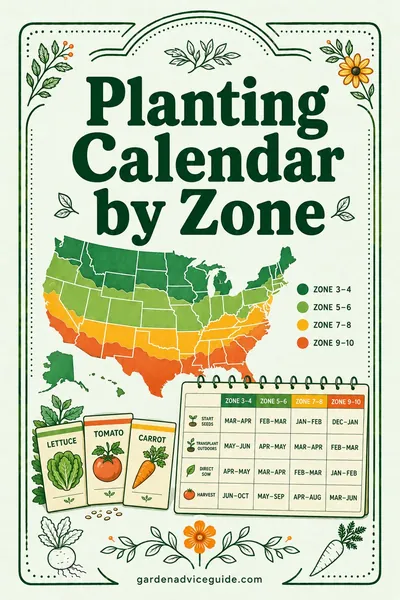
For the whole-season version of that list, our planting calendar by zone lays out each month against your frost dates.
Frequently asked questions
What vegetables can I plant in April?
In cold zones (3 to 6), plant peas, spinach, radishes, carrots, beets, lettuce, kale, turnips, potatoes, onions, and broccoli transplants. In warm zones (7 to 9), plant tomatoes, peppers, beans, corn, cucumbers, squash, melons, okra, and sweet potato slips. The dividing line is your average last frost date, not the calendar.
Is it too early to plant tomatoes in April?
In zones 3 through 6, yes. Tomatoes want soil at 60°F and nights above 50°F, and April rarely delivers either that far north. In zones 7 and warmer, April is exactly right, with zone 7 waiting until the second half of the month. Setting tomatoes out into cold soil stunts them for weeks with no gain in harvest date.
What flowers can I plant in April?
Hardy annuals go in first: sweet peas, larkspur, poppies, calendula, bachelor buttons, snapdragons, pansies, and violas all handle a light frost. Tender flowers like zinnias, cosmos, marigolds, sunflowers, and dahlias wait until after your frost date. April is also the best window all year for bare-root roses and perennials.
Can I plant grass seed in April?
You can, but spring is the second-best window for cool-season grass, and it is second by a wide margin. Spring seedlings meet their first summer with shallow roots, and spring seeding conflicts with crabgrass pre-emergent. Our guide on when to plant grass seed covers both the spring and fall windows.
What should I start indoors in April?
In zones 3 through 6, start cucumbers, zucchini, winter squash, pumpkins, and melons, all 3 to 4 weeks before your frost date. Early April is also the last usable window for tomatoes and peppers in the coldest zones. Anything with a longer indoor stretch, like onions and celery, needed a February or March start.
How do I know if my soil is warm enough to plant?
Push a soil thermometer 2 inches deep and read it mid-morning, three days in a row. Peas and spinach germinate around 40°F, lettuce and carrots around 45°F, corn around 55°F, and beans, cucumbers, and squash need 60°F or higher. Okra wants 65°F. Soil temperature beats air temperature every time as a planting signal.
What if a late frost is forecast after I plant?
Hardy crops need nothing. Cool-season transplants like broccoli and cabbage handle a light frost down to about 28°F once established. For anything tender that is already in the ground, water the soil in the afternoon and cover before sunset, since wet soil holds more heat, then take the row cover or upturned bucket off in the morning. Plastic touching leaves conducts cold, so keep it propped off the foliage.
Which crops should I sow in succession in April?
Radishes, lettuce, arugula, spinach, and cilantro all mature fast and then bolt, so sow a short row every 10 to 14 days instead of one long row once. Beets and carrots take a 3-week interval. The technique is covered in detail in our guide to succession planting.
The takeaway
April rewards gardeners who count backward from their frost date instead of forward from the first warm weekend. Get the hardy crops in the ground in the first half of the month, keep the tender ones under lights until the frost date passes, and check soil temperature before you trust any chart.
Look up your own frost dates and get a per-crop planting window in our free monthly planting calendar, then work through the month one week at a time.
For the zone-level view of your frost dates, the USDA Plant Hardiness Zone Map is the primary source most planting charts are built from.